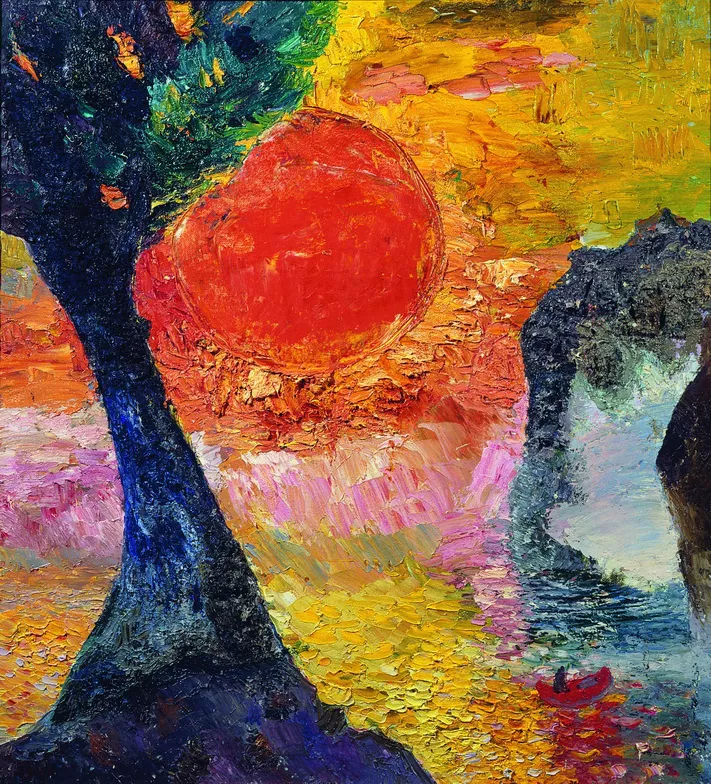
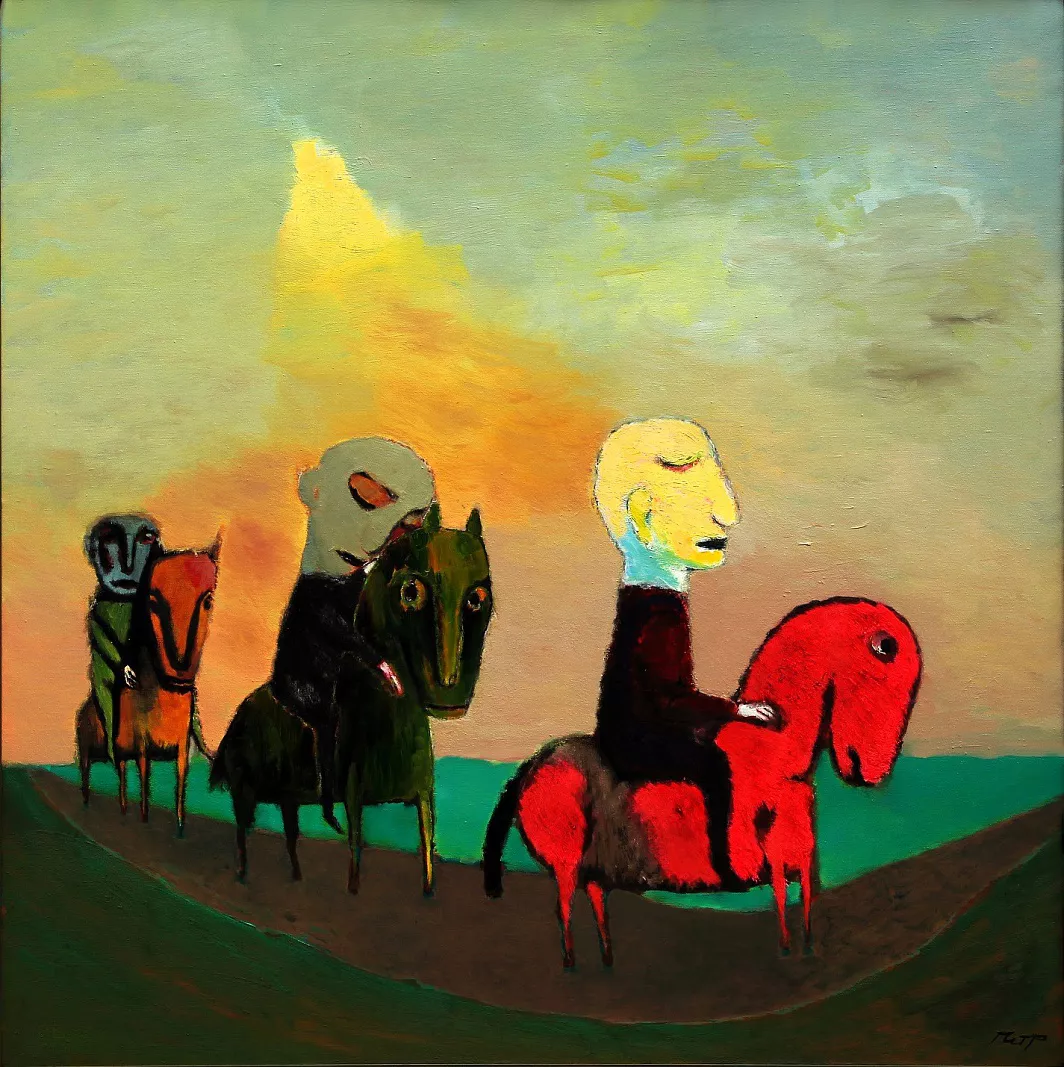
An inter-museum project organised to mark the 10th anniversary of the Museum of the 20th- and 21st Century Art of St Petersburg (MASP) is devoted to the theme of Mankind as the centre of the universe. The concept of the exhibition is revealed through the contrast of comparisons between different eras and artistic styles, from the beginning of the 20th century up to the present day. On display are more than 150 works of painting, sculpture, art objects, and installations from both the collection of the MASP and other museums in Petersburg and Moscow. A significant role in the exhibition is given to multimedia visualisation of artistic content that interacts with the viewer on an emotional, psychological, and physical level, drawing them into an immersive interactive experience.
The exhibition shows different sides of Humanity through its physical and spiritual manifestations, from the Fall, carnal pleasures, and searching for one's path in life to passing into the other world. These themes shape the content of the individual sections of the exhibition, such as “Self-Portrait,” “Family,” “Adam and Eve,” “Meals,” “Travels,” Sleep,” and “Death,” which demonstrate the logic of life as such, with all its ups and downs, victories and defeats, passions and struggles, chaos and harmony. It is chaos and harmony that lie at the heart of the universe. And so the exhibition opens with a section devoted to the primordial elements. Chaos as the primitive state of the earth, devoid of any order, is represented in the works of Svyatoslav Roerich (You Must Not See This Flame, 1968), Andrei Volkov (Fire, Come with Me, 2010–2011), Vladimir Kolesnikov (A Thousand Lightning Bolts. The Red One, 2022), Konstantin Batynkov (Eruption, 2008), Andrei Tal (Baroque. Putti, 1991), and other artists. The chaos in the exhibition is balanced by the harmony transformed in the works of Vitaly Tiulenev (Spring Wind, 1992), Nikolai Vechtomov (Equilibrium, 1960), Mikhail Kulakov (Birth of a Star, 1999), Sergei Kolesnikov (Northern Lights, 2018), into colour energy possessing invisible power
Harmony begets a Man. And the image of that personality, in all its diversity of essential qualities, is revealed to the viewer in sections of the exhibition representing the themes of self-portraiture and family: self-portraiture as an artistic and figurative form of self-discovery, as an ironic grotesque of oneself, self-portraiture as a mask, self-portrait as a semiotic picture of the world, and genre family portrait. One will have a chance to see the paintings by Grigory Grinberg (Self-Portrait, 1921), Victoria Belakovskaia (Self-Portrait, 1928), Liudmila Markelova (Myself, 2014), Lidia Kirillova (Self-Portrait, 1980), Andrei Bartenev (Self-Portrait, 2021), and others.
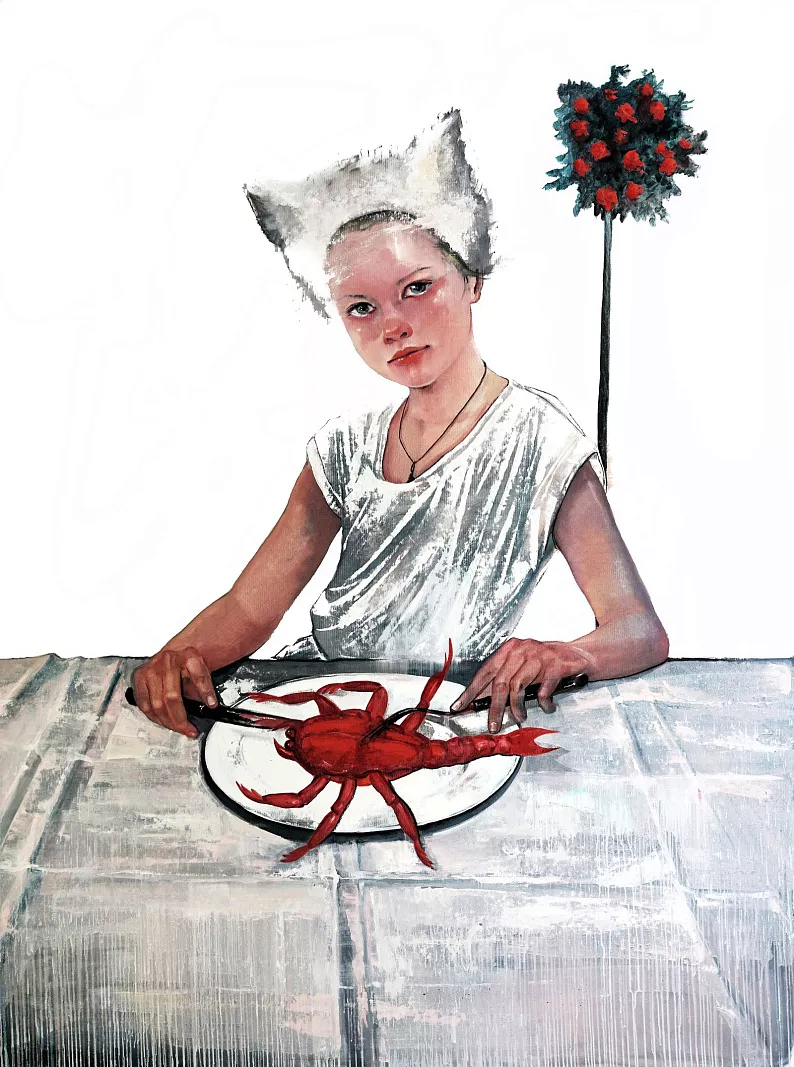
The theme of food and meals as an important component of the system of human coordinates also took its place in the exhibition. On display are the paintings Those at the Bottom Are Starving because Those at the Top are Gorging Themselves (1923) by Erik Ioganson, the Revelry (1905–1907) by Niko Pirosmani, and the Hairy Soup (1990) by Petr Reikhet, a well-known postmodernist artist who created a scathing satire of the 1990s reality and the people of the new era.
The life program of a person is revealed through the themes of birth, the search for meaning in life, and the motifs of sleep, which gradually transforms into death. The history of the human race begins with Adam and Eve. Humanity lost Paradise, unity with God, unity with other people, and harmony with the world. Twentieth-century artists, each in their own way, interpret biblical stories. While Boris Anisfeld of the World of Art movement, depicts the Garden of Eden as a fairy-tale dream or a fantastic vision, Rostislav Voinov (Expulsion from Paradise, 1910s) interprets the scene of the Fall as a universal catastrophe. And the artist of the 1960s, Gely Korzhev, deliberately shifts the emphasis, revealing the dramatic meaning of what is happening (Autumn of the Forefathers, 1995).
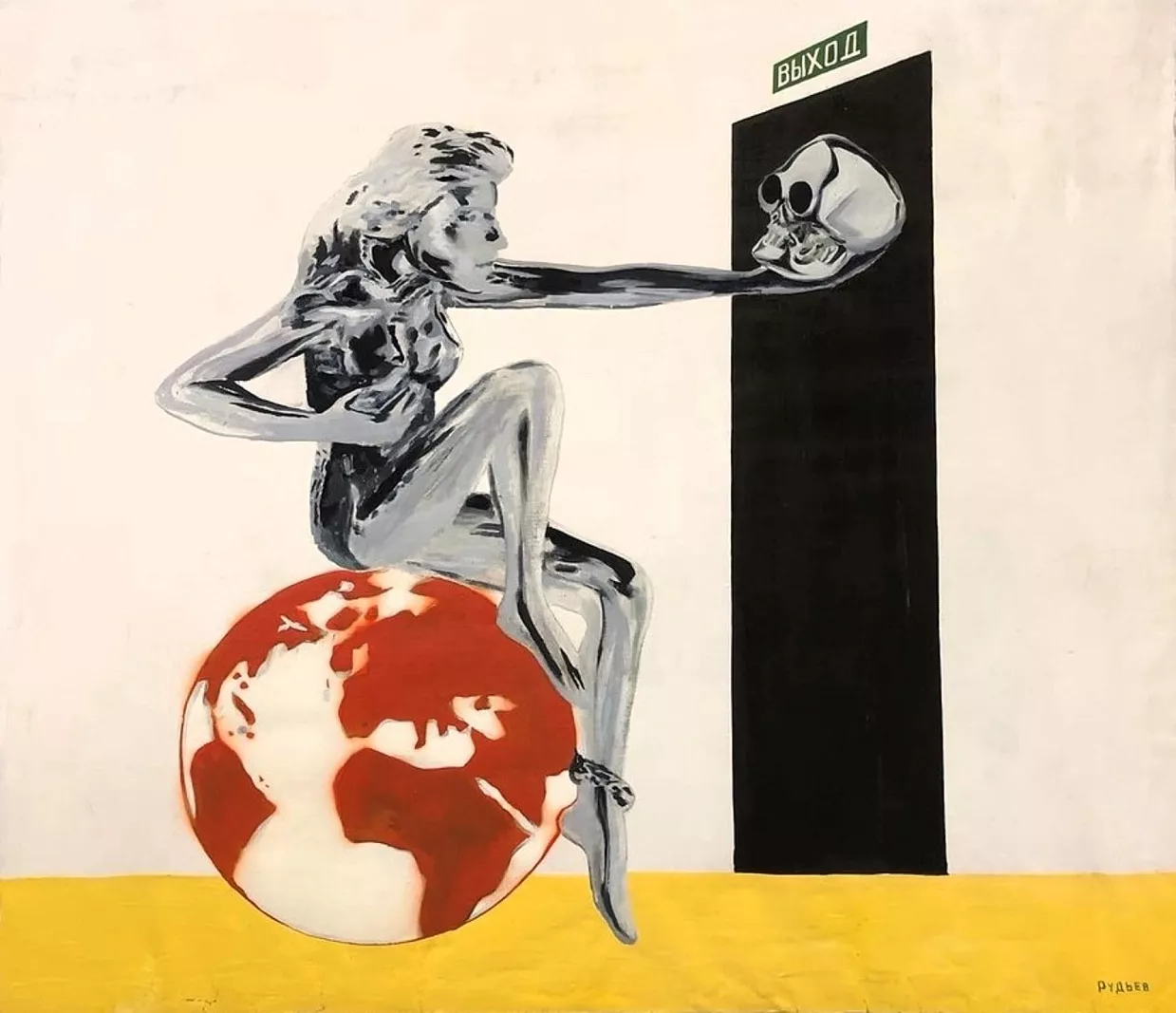
The spiritual quest of an individual occupies a central place in the exhibition. In the works by Lev Snegirev (On Earthly Path, 2010), Samuil Adlivankin (Subway, 1946), Israel Lizak (Man Walking, 1928), Rady Matiushin (Escape, 1999), Igor Shirshkov (Another Life, 2017), Egor Koshelev (The Fur Tunnel, 2023), Oleg Ivaschenko (Escape, 2022), and Stanley Krasovitsky (Speed, 2024), one can discern an acute sense of the world’s imperfection and a latent desire to escape from it.
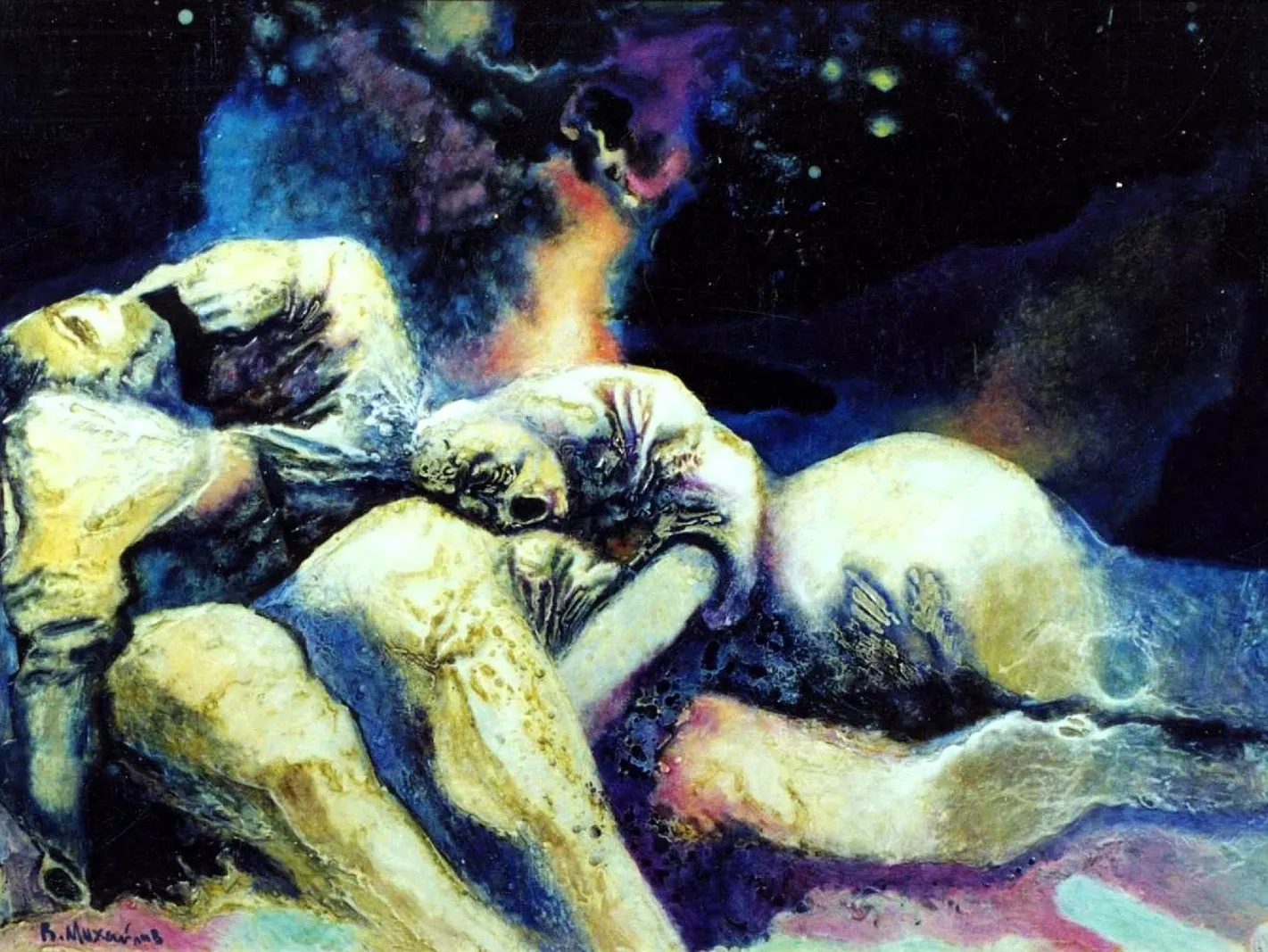
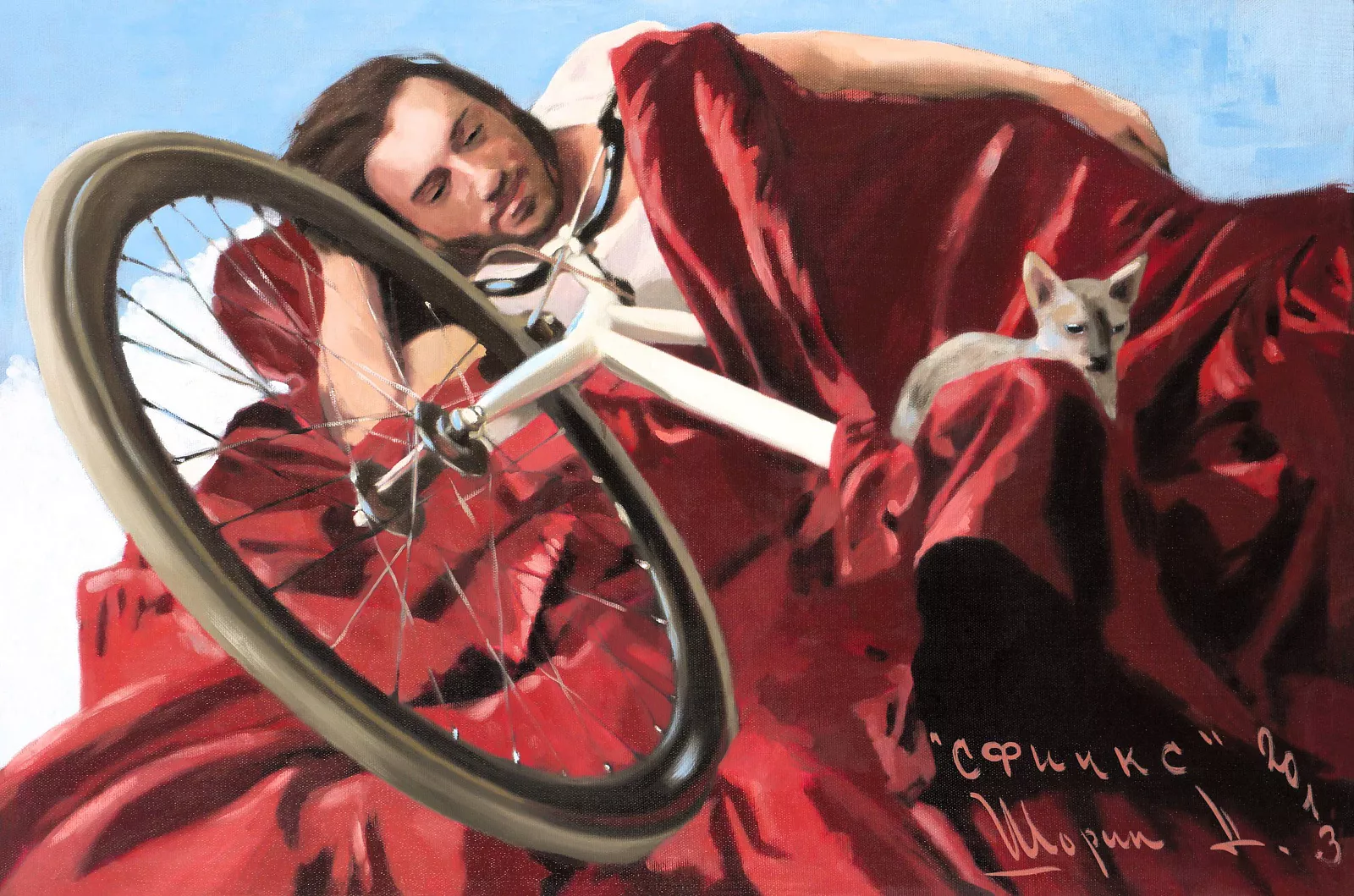
At the exhibition, the theme of sleep is seen not only as a physiological phenomenon, but also as a profound philosophical and cultural phenomenon, symbolising the transitional state between consciousness and unconsciousness, life and death, the earthly and the divine. In the Work Is Done (1970) by Viktor Popkov, the theme acquires an existential tone. In the sublime and poetic Silence (1971) by Evsei Moiseenko, sleep is a recollection of the past. The Dream (1986) by Viacheslav Mikhailov expresses anxiety about the fate of humanity and reflects on the lost harmony of the world.
The theme of Man and the universe is inexhaustible. The exhibition merely indicates the place of mankind in the picture of the world of the past century and our days, showing the problem of this relationship as seen through a contrasting comparison of different artistic styles and trends, traditional realistic painting, creative experiments of postmodernism, Soviet nonconformism, and contemporary art. The main task of the exhibition is to discover the opposites, dissonance, or harmony of visual forms, ideas, and characteristics of each stage. The comparison of works allows us to explore the nature of the progress of artistic culture, understand the patterns of its development, and identify the essential circumstances of those changes that sometimes lead to directly opposite transformations of meanings and aesthetic values.